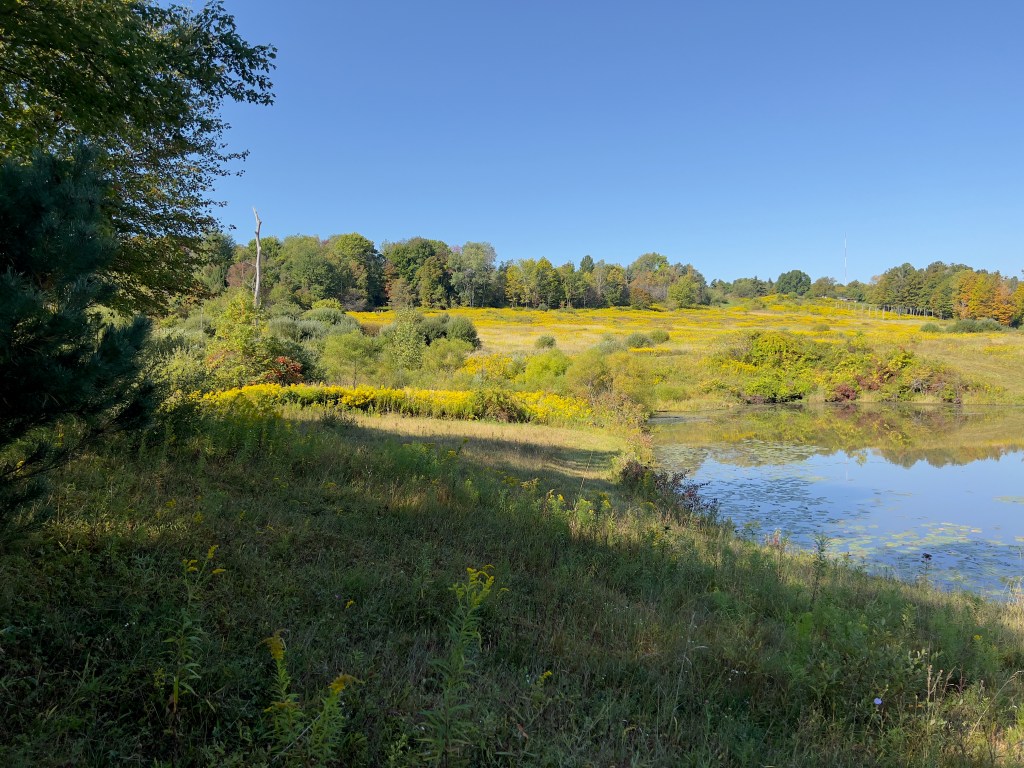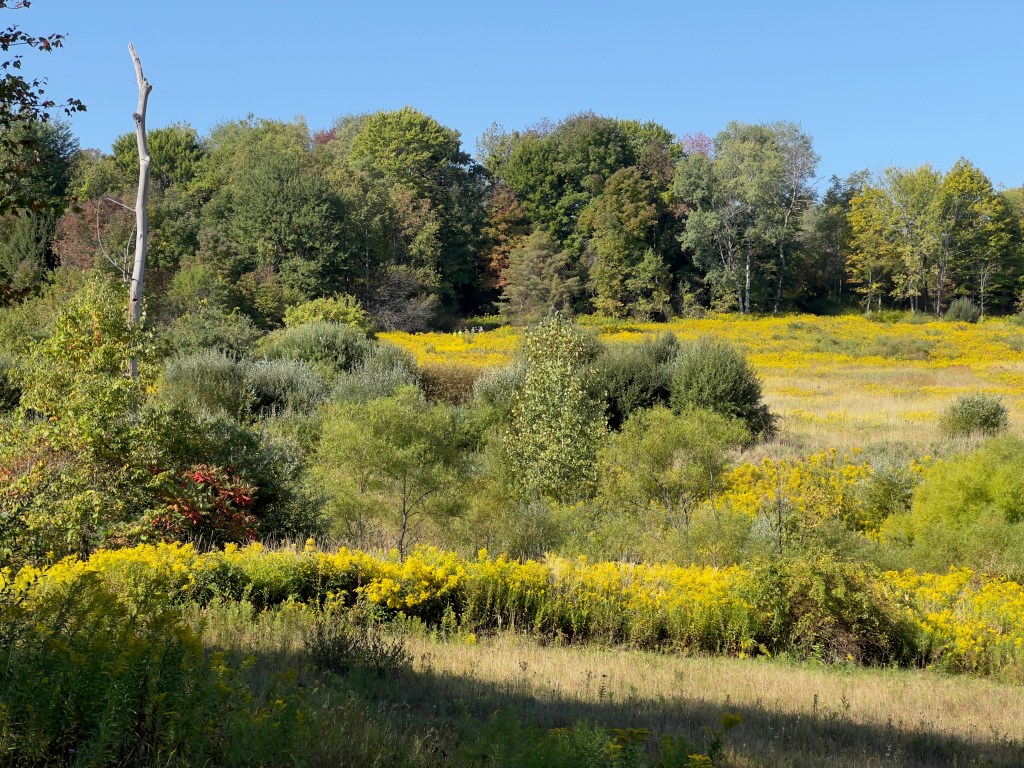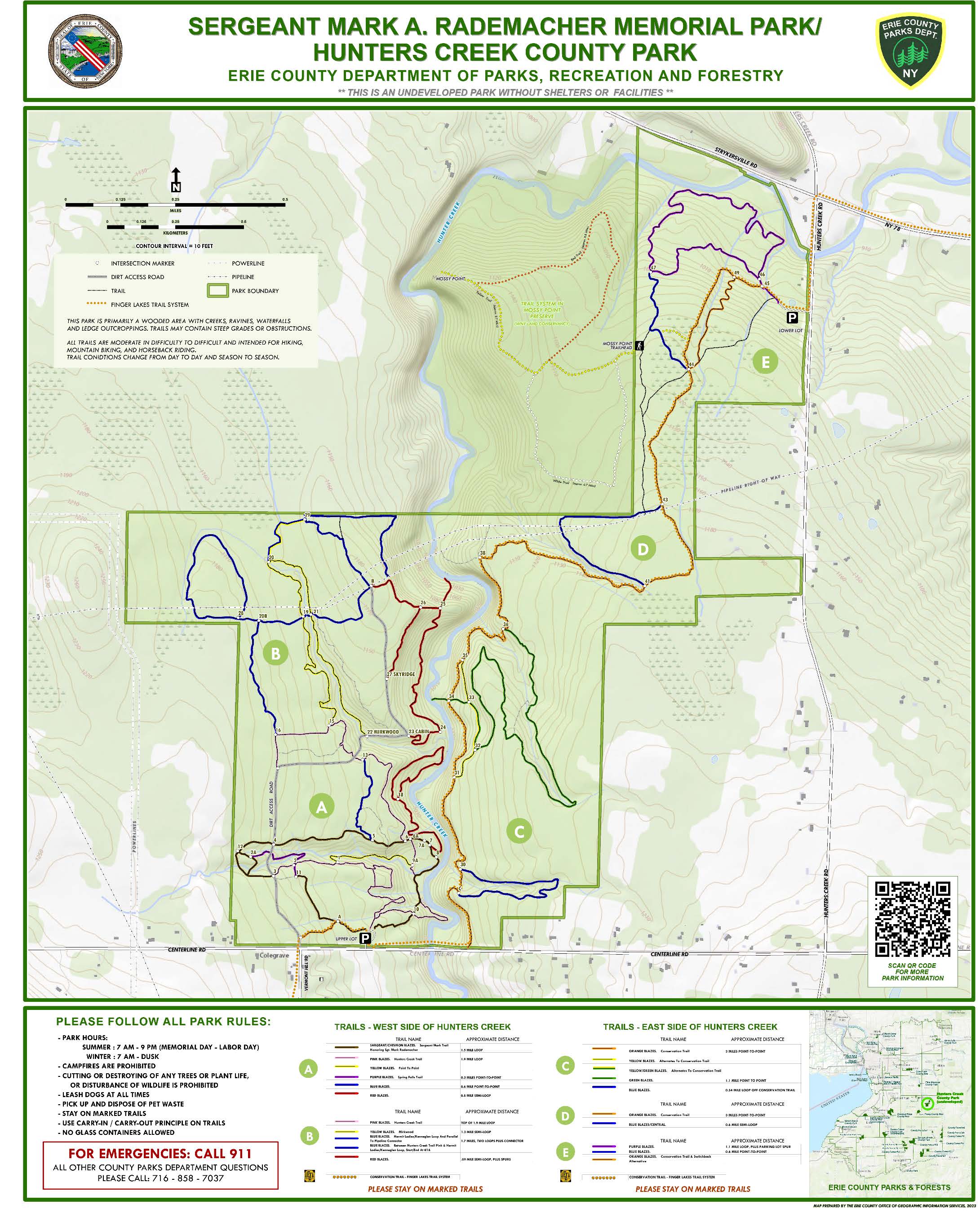
The Erie County Parks Department has granted a temporary permit to BuffaLoRa to install a Meshtastic communication node at Chestnut Ridge Park’s sledding hill.
Views of Downtown Buffalo and beyond
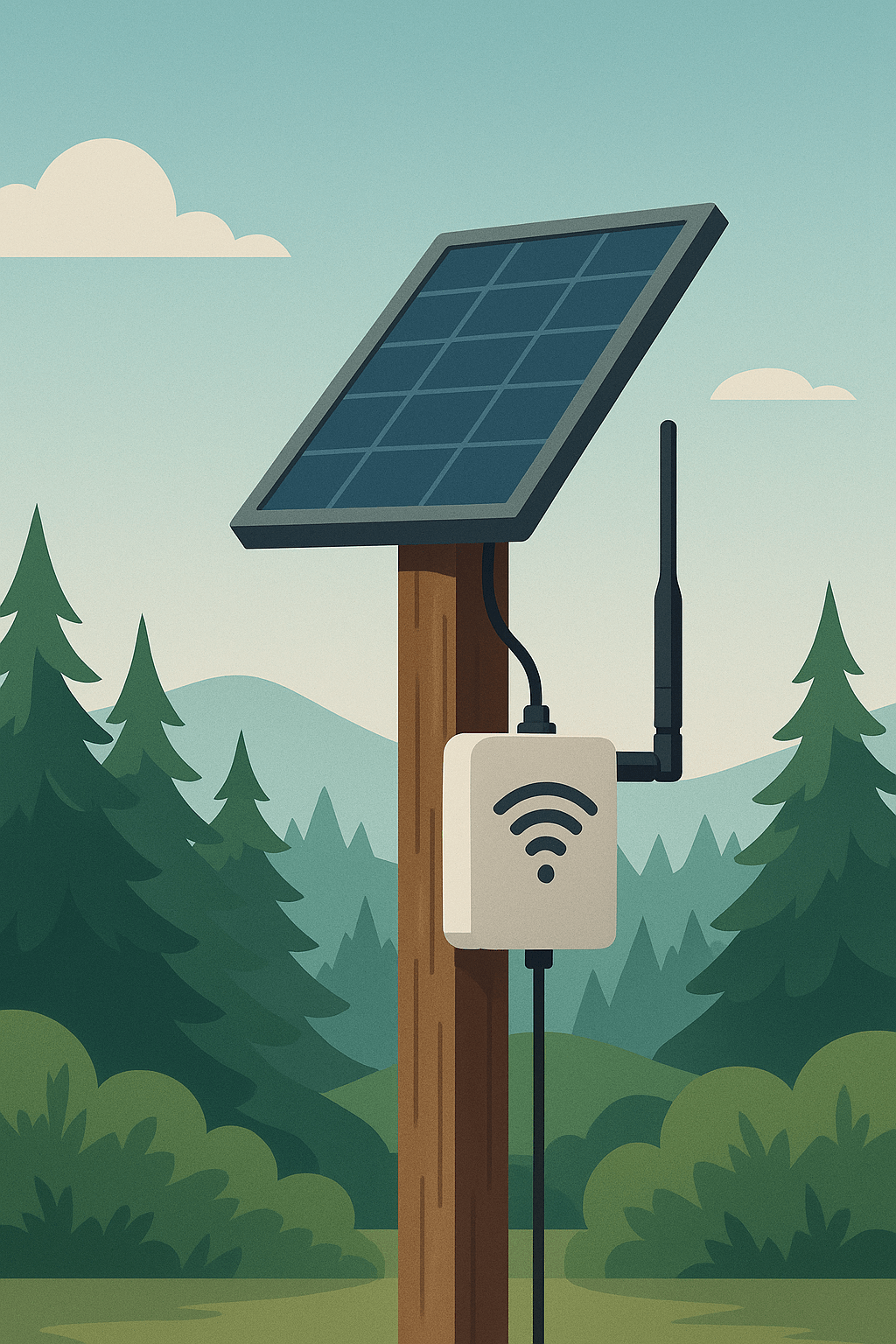
This installation uses a Seeed SenseCAP Solar Node P1-Pro, a compact, solar-powered, and environmentally friendly device that enables off-grid, long-range communication using LoRa (Long Range) technology. The equipment operates silently, safely, and without any interference to existing park systems, wildlife, or visitor activities.
Andrew finishing the node deployment
Located at one of the highest points in Erie County, the Chestnut Ridge site provides excellent visibility and signal reach across the region, including the City of Buffalo and extending north toward Fort Erie, Ontario. The new node will enhance regional connectivity, supporting local community members, amateur radio enthusiasts, and emergency preparedness volunteers.
Meshtastic Site Planner
Benefits to the Public
Off-grid communication: The Meshtastic network operates independently of traditional cellular and internet systems, providing a reliable backup communication option during power or network outages.
Community resilience: Everyone connected to the mesh network can exchange text messages and GPS information using low-cost, battery-efficient devices with no monthly service fees.
Educational opportunities: The project demonstrates practical uses of open-source technology and fosters local engagement with wireless innovation and STEM learning.
Sustainability: The solar-powered unit requires no external power or maintenance.
Special thanks are offered to Chestnut Ridge Park for allowing use of this amazing site.
Stop by Chestnut Ridge Park to enjoy the natural beauty and amazing facilities of this amazing park and learn how you can join the mesh network at 👉 BuffaLoRa.org
Building a connected Western New York — one node at a time.
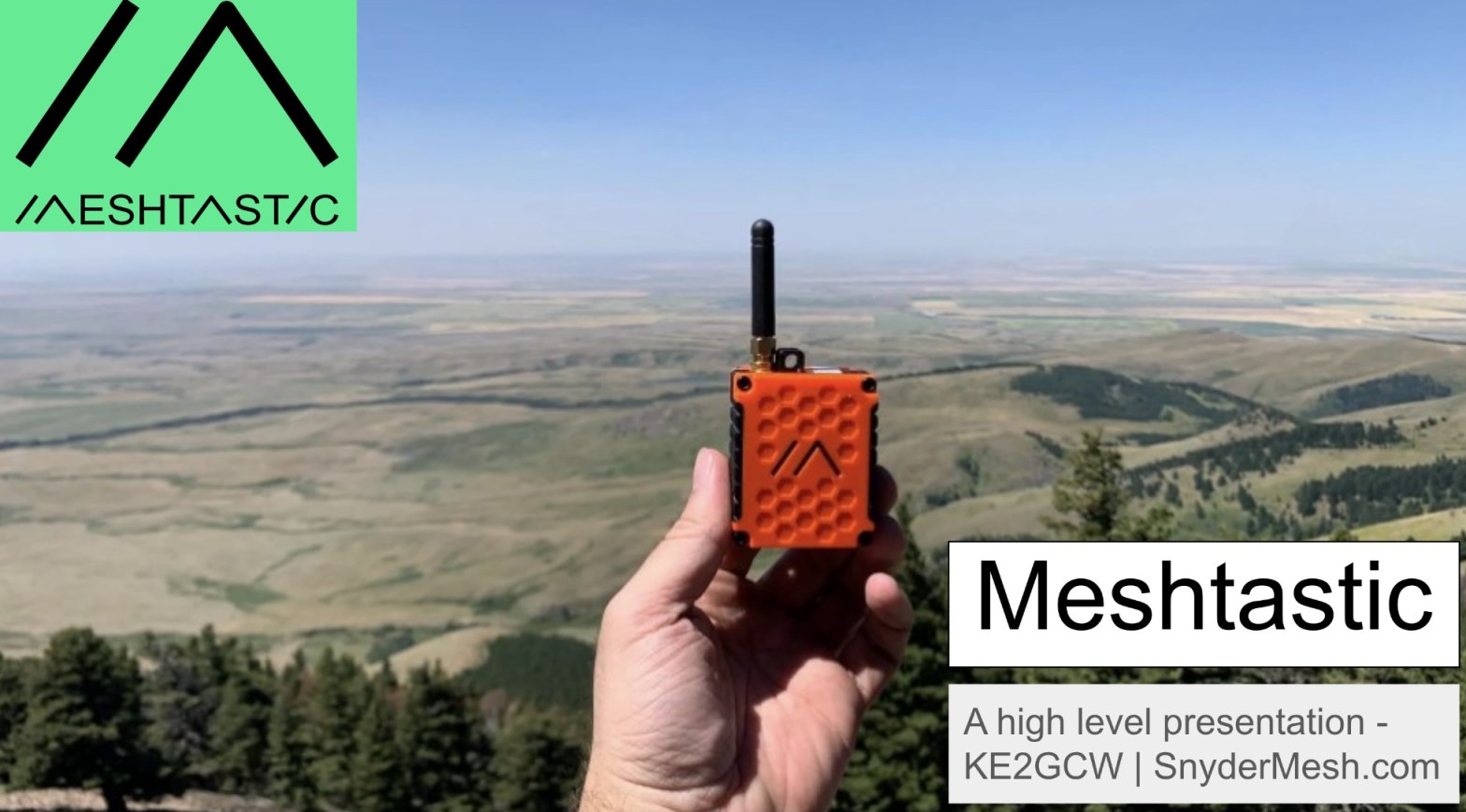
It was very exciting to present a high level overview of Meshtastic at The Radio Association of Western New York’s (RAWNY) October Meeting on Tuesday, October 14th 2025.
It was excellent to connect with many old and new friends in the Meshtastic and Amateur Radio community.
A list of devices with affiliate links and available discount codes at Devices.
We look forward to the opportunity to make further partnerships in the Western New York region, connecting new nodes but most importantly connecting people.
One of the real-world applications for Meshtastic is to use it in combination with Android Team Awareness Kit (ATAK) to provide an off-grid means of communicating between ATAK users and/or to provide a means of asset tracking. ATAK is an Android smartphone geospatial infrastructure and situational awareness app. It allows for precision targeting, surrounding land formation intelligence, situational awareness, navigation, and data sharing. ATAK was originally developed by the Air Force Research Laboratory as the Android Tactical Assault Kit and has seen wide use across the US Armed Forces. ATAK is also widely used in wildland fire incident management in the Western US. ATAK has clients beyond just Android to include iOS devices (iTAK) and Windows computers (WinTAK). If TAK clients are on the same LAN, they will find each other and allow for data sharing and communication between clients along with seeing the physical GPS location of each client on a map. For wider area coverage, TAK clients can connect to TAK servers over the internet to maintain that communication between clients. But what happens once you go off-grid and you no longer have that internet connection? That’s where Meshtastic comes in quite handy via the Meshtastic Plugin for ATAK.
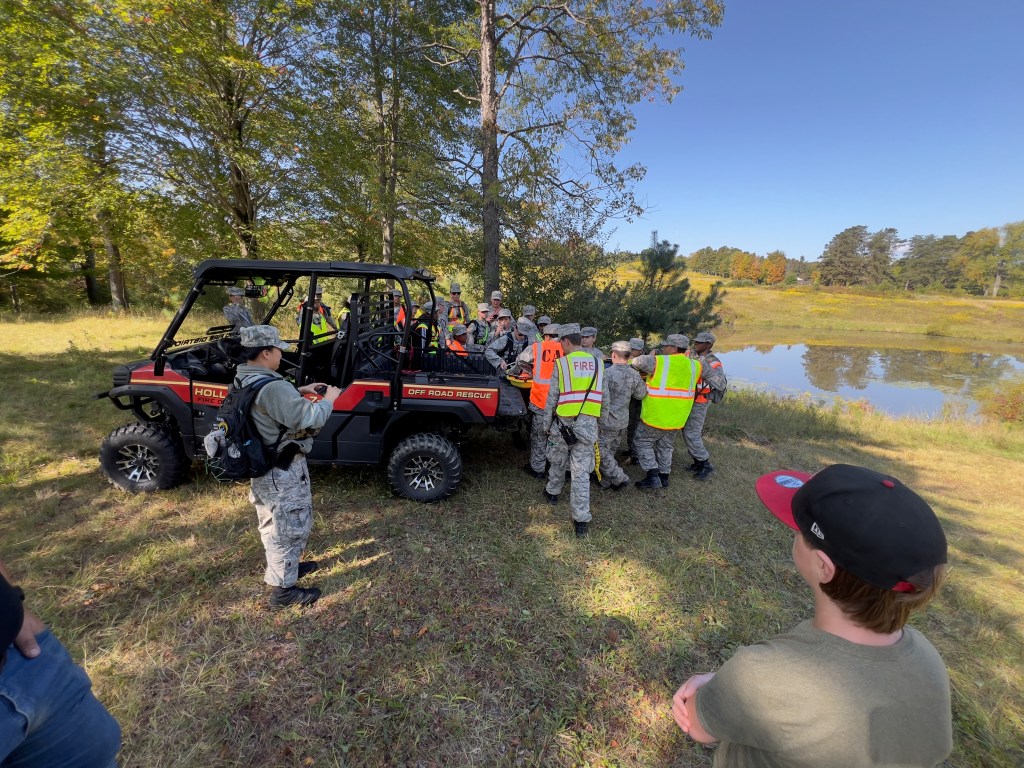
The scenario for my use of ATAK/Meshtastic started a few weeks ago when I received a phone call from a cadet with the local squadron of the Civil Air Patrol requesting the participation of my fire company and a neighboring fire company to help extract simulated victims from the woods during a CAP training event in the Town of Wales in September 2025. The plan was for the CAP cadets to locate lost/injured victims in the woods, get them to the tree line and direct fire company assets to their whereabouts, and have the fire companies extract the victims back to the CAP encampment by the road. As I was going to be the only ATAK user on-site for this drill, I did not need the chat communications aspect of ATAK, but since I was sending personnel and equipment off into the wilderness out of my sight, I most certainly wanted to use the asset-tracking aspect of ATAK.
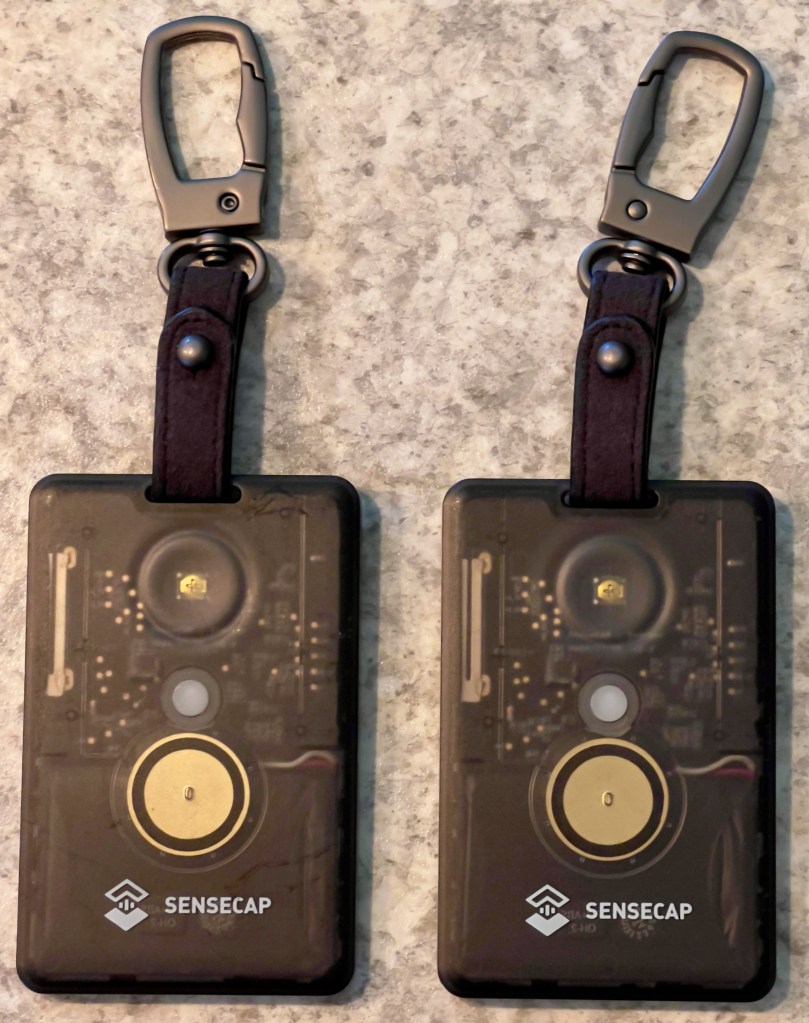
SenseCAP Card Tracker T1000-E
My easiest to deploy, no-frills, water-resistant nodes are both the SenseCAP Card Tracker T1000-E for Meshtastic from Seeed Studio. These are self-contained with the node, antennas, GPS, and battery in a small ID tag sized device. It’s not much thicker than a credit card and is IP65-rated. They are quite easy to clip to the top strap of a backpack if you are in need of tracking personnel teams on foot, or as in today’s drill, they can be very easily clipped to a UTV and a light rescue truck before they drive off the road heading for the woods.
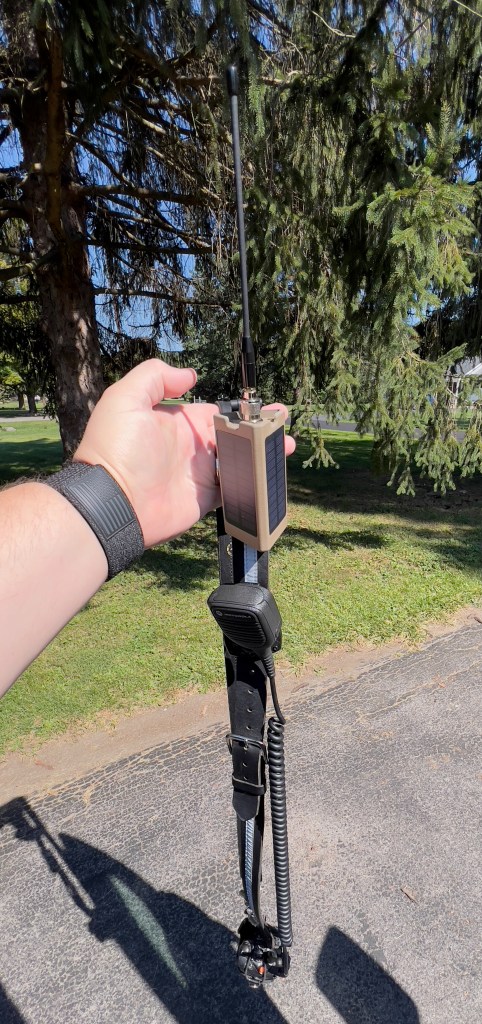
Tactical node attached to radio shoulder strap
I also needed a node that would stay with me that would be connected to my Android phone which is where I would run the ATAK app. For this I grabbed a clip-on tactical node which has two solar panels in its housing and runs off a RAK WisBlock 4631. I clipped this onto the shoulder loop of my portable radio strap.
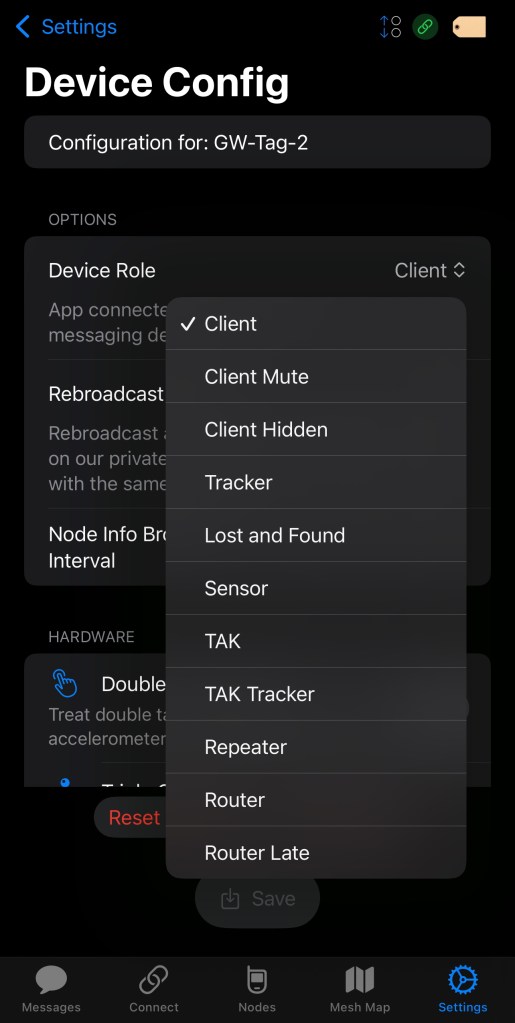
From the configuration standpoint, all I needed to do in Meshtastic was set the node on my shoulder strap to the “TAK” role and the two T1000-E nodes to the “TAK Tracker” role. The settings for this can be found in the “Device Config” section of the Meshtastic app.
From there it is just a simple matter of keeping the Meshtastic app open in the background on my Android phone with it set to connect to my shoulder strap node via Bluetooth, and open in the foreground the ATAK app on the phone.
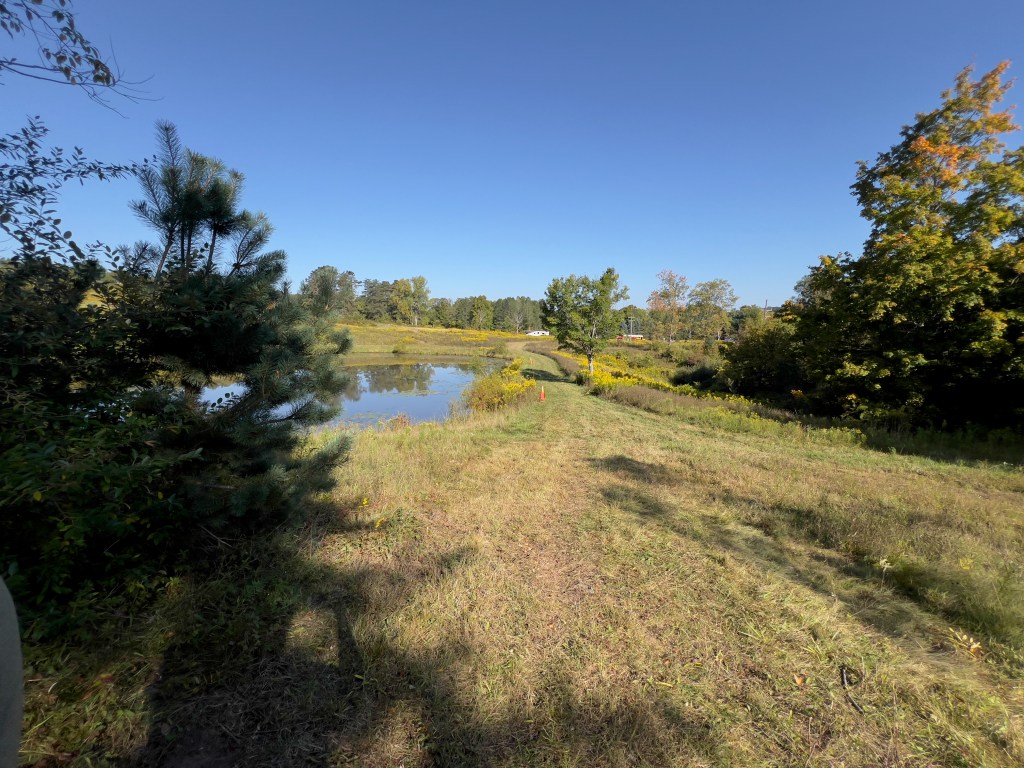
View from hilltop staging area back to the CAP encampment near Goodleberg Road in the Town of WalesHolland Fire Department Light Rescue Truck #7-1 off-road at the hilltop clearing staging area
My son and I hiked in on foot from the road and could see the position of both apparatus on the ATAK map the whole time we hiked back to their location. The light rescue truck staged in a clearing at the top of a hill and off-loaded its Stokes basket onto the UTV which then was directed by CAP cadets to the location of the first victim.
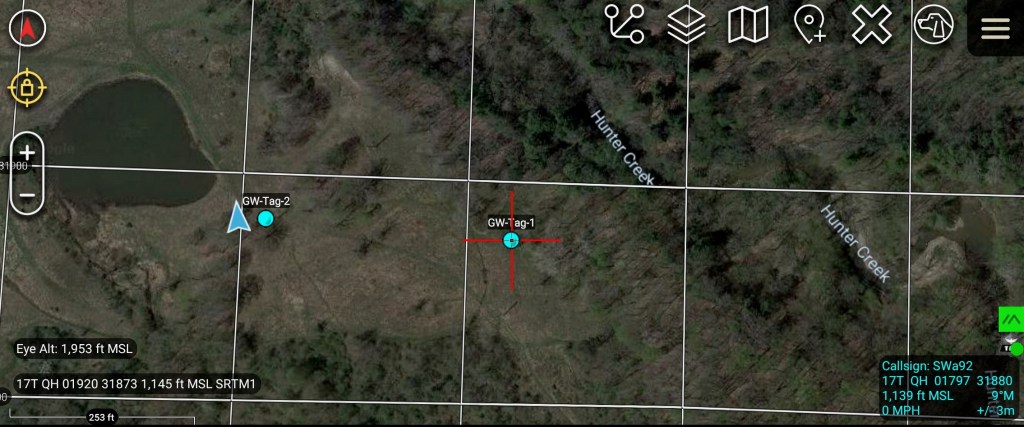
Screenshot from ATAK
GW-Tag-1 was attached to Holland Fire Department UTV and GW-Tag-2 was attached to the Holland Fire Department light rescue truck. In the above screenshot we could follow the position of the UTV as it went to retrieve the first victim. The UTV was off on a trail below the staging area beyond some trees and was not visible from the hilltop.
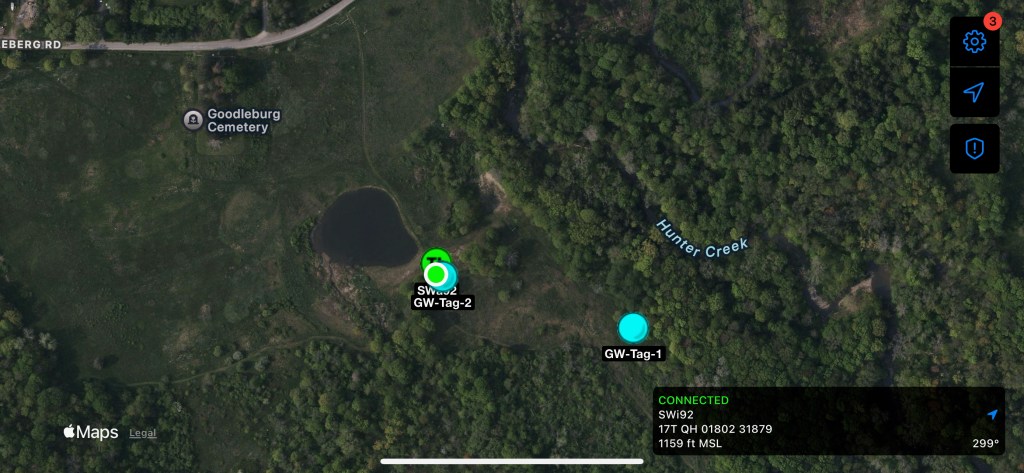
iPhone screenshot of iTAK showing the TAK Tracker assets being passed through my TAK server from ATAK
I did have limited internet connectivity on both my Android phone and my iPhone from the hilltop staging area. Both my ATAK and iTAK clients are connected to my TAK server over the internet. ATAK was relaying to the TAK server the position information it received over Meshtastic from the two TAK Tracker devices. Because of this, the iTAK client on my iPhone could see the location of both of the TAK Trackers via its connection to my TAK server. It could also see the location of my ATAK device on the map (appears as co-located with GW-Tag-2 on the above screenshot).
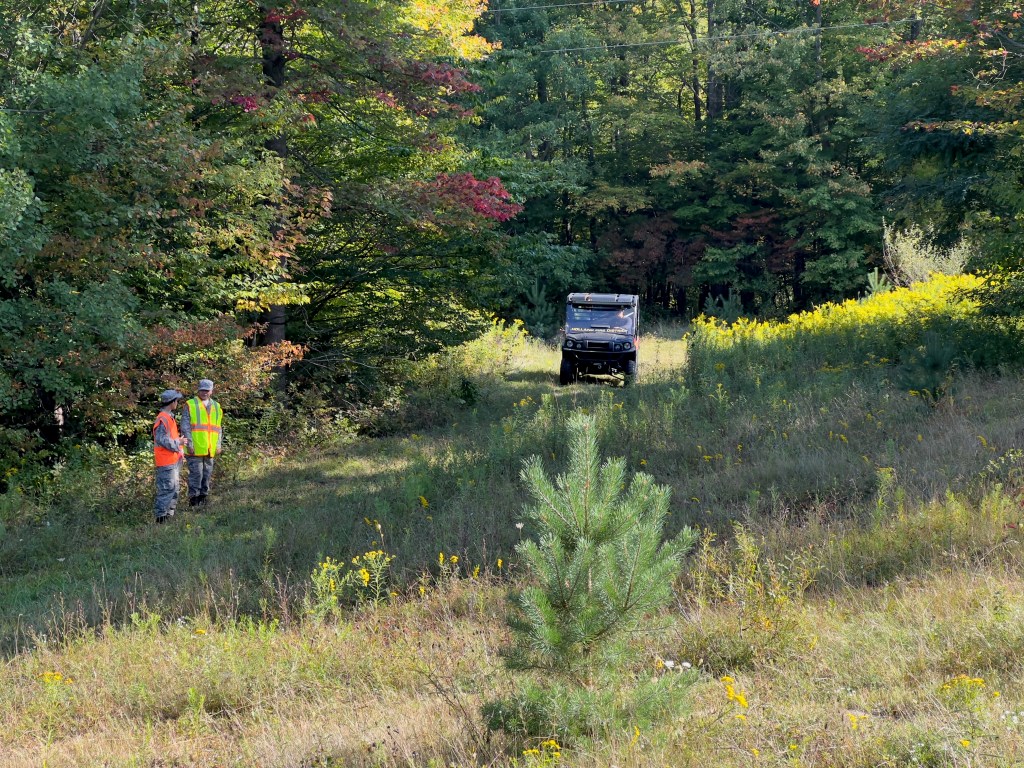
Holland Fire Department UTV #7-2 returning with the first victim along with two CAP cadets on foot
For the second victim extraction, the CAP cadets wanted to hike in and back out of the woods on foot to hand-carry the victim back to the staging area. They borrowed Holland’s Stokes basket and went up a trail to the second victim’s location.
Location of the second victim up the hillCAP cadets off in the distance accessing the second victim and packaging them into the Stokes for hand-carry back down the hillCAP cadets returning to staging area with the second victim in Stokes basket and loading the victim onto the UTV
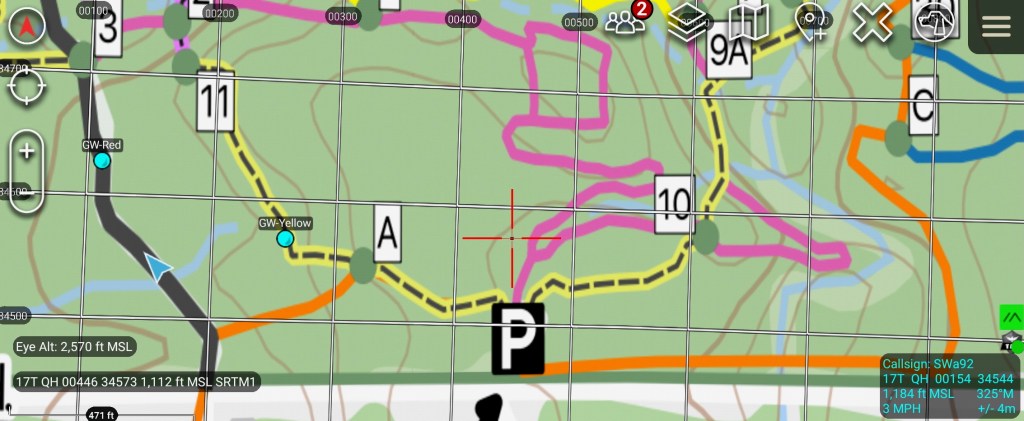
Today’s drill made for a simple opportunity to test out the ability track fire department assets deployed in a wildland area through the use of ATAK and Meshtastic devices. This is the second time I’ve used this setup on a fire company drill. In September 2024 we did a park familiarity drill at Hunters Creek Park where teams of fire department members hiked the extensive park trails on foot. Again teams were all visible on the ATAK map throughout the hike, but I had overlayed a GeoPDF park trail map on ATAK to help identify which trail teams were on.
Screenshot from ATAK with overlayed park trail map showing separate team locations on trails
Through the use of the Meshtastic plugin for ATAK, off-grid communications and position tracking between ATAK devices can be easily achieved. The use cases for the TAK suite of applications is quite extensive and beyond the scope of this article, and there are numerous YouTube videos to walk you through the many uses for ATAK.
We’re excited to share some big news: SnyderMesh has officially expanded and will now be known as BuffaLoRa! This new name better reflects our growing footprint across Western New York, and our mission to connect communities with resilient, decentralized communication through Meshtastic and LoRa technology.
Why the Change?
When we started SnyderMesh, our focus was small and local. But with each new node, partner, and supporter, the network grew beyond Snyder. Today, our coverage spans across the Buffalo Southtowns and is pushing into the city and the northern suburbs. The new name — BuffaLoRa — captures both our home base in Buffalo and the LoRa technology that makes it all possible.
Featured on NYMesh and Meshtastic
We’re grateful to have friends who are helping spread the word about this next chapter.
NYMesh, one of the most inspiring community mesh networking projects in the world, is promoting our expansion on their site: nyme.sh We’re also proud to now be listed on the official Meshtastic Local Groups page, putting BuffaLoRa on the map alongside other regional community builders.
These connections highlight the collaborative spirit that makes community networks thrive.
What’s Next for BuffaLoRa?
Our work is just getting started. In the coming months, we’ll be:
Deploying more nodes to strengthen coverage across Buffalo and Western New York Partnering with local organizations and radio clubs to expand resiliency and reach Supporting experiments and use cases that show what community-driven communication can achieve
We believe in building a network that belongs to everyone – a system that’s open, community-powered, and resilient enough to keep people connected when they need it most.
Get Involved
If you’re in Western New York and want to join the movement, we’d love to have you. Whether you’re interested in hosting a node, lending technical skills, or simply learning what this technology can do, BuffaLoRa is here for you.
We invite W2SO Members to join us at the Lancaster Amateur Radio Club General Meeting this September 2nd, where we will be diving into the exciting world of Meshtastic — the open-source, long-range, low-power mesh communication platform.
To make the most of our time together, we’re asking participants to update their Meshtastic devices in advance with a special channel and LoRa configuration that will be used during the meeting. This ensures everyone can connect seamlessly and take part in live demonstrations, testing, and collaboration.
How to Prepare
We’ve made setup simple:
👉 Scan the QR Code (below or at the meeting)
👉 Or click the link provided to automatically assign the correct channel and LoRa settings to your device
That’s it! Once updated, your node will be ready to mesh with the group at W2SO.
Why Update in Advance?
Instant Connectivity – Join the shared network as soon as you arrive
Hands-On Demos – Participate in live examples without setup delays
Community Building – Experience how Meshtastic strengthens communication across Western New York
Event Ready Mesh – The event configuration includes sensible defaults to help ensure stability of the dense mesh environment we expect to experience
Event Details
📍 Lancaster Office of Emergency Management (OEM Building), Lancaster, NY 📅 September 2, 2025 General Membership Meeting 🎙️ Featuring: a Meshtastic Presentation by KE2GCW (SnyderMesh), Live Meshtastic demos, Q&A, and community networking
We’re excited to announce the newest addition to the BuffaLoRa community network: the deployment of a Meshtastic node — short name KMBL — at the Buffalo Amateur Radio Repeater Association (BARRA) Kimball Tower Repeater Site on August 13th, 2025. This site provides an excellent vantage point within the Western New York region with clear views spanning West from Orchard Park in the South across the City of Buffalo to Tonawanda in the North and beyond.
View from Kimball Tower
BARRA is a cornerstone of amateur radio in Western New York, and we’re incredibly proud to partner with them in this endeavor. To learn more about their extensive work supporting the region with amateur radio repeater infrastructure and volunteer services, visit barrabuffalo.org.
About the Site
The Kimball Tower repeater site is quite impressive, located on the tallest point of the University at Buffalo South Campus. Additional details of the site to come.
Kimball Tower BARRA Repeater Site
About the Node
The BuffaLoRa node KMBL was constructed using a Station G2 Mini Meshtastic Starter Kit (US915 band) featuring:
USB-C to USB-C cable and AC Adapter from an old phone
This node pushes power up to the 1 watt legal limit for the 915 mHz ISM band for unlicensed use.
Estimated coverage map from Meshtastic Site Planner
Special Thanks to Our Partners
This deployment would not have been possible without the dedicated members of BARRA:
Ted Ertl (WA2HKS) – Trustee of the 444.000 MHz repeater and BARRA member, who coordinated the collaboration and shared expert RF knowledge, plus gave us a guided tour of the facility’s impressive infrastructure.
Jeremy ‘Jer’ Medinac (N2UGS) – Provided technical guidance and performed maintenance restoring service for the Amateur Radio AllStar Node and 10 meter repeater.
Douglas A. Alderdice (KA2WFT) – BARRA President
We are deeply grateful for their time, knowledge, and commitment to the amateur radio and broader communications community.
Ted and Jeremy restoring service to the 10 meter amateur radio repeater.
Want to Get Involved?
The partnership between BuffaLoRa and BARRA showcases what’s possible when local organizations come together to build community-focused technology. If you’re a business, nonprofit, school, or community leader interested in hosting a node or supporting mesh expansion, we’d love to hear from you.
Help us grow the network and bring resilient, decentralized communication to every corner of Western New York.
Howdy Meshers, recognizing that security is a critically important concern, please be careful when communicating over SnyderMesh and other Meshtastic networks. Hackers continue to look for and exploit vulnerabilities in Meshtastic. The open source development team will continue to implement bug fixes and look at rearchitecting as needed to help avoid these vulnerabilities. Be sure to regularly update your firmware and apps to benefit from these latest fixes.
Do not share or trust information on public or private channels that you would not feel comfortable sharing publicly or trust learning from a publicly announced but unverified source.
Direct messages seem to be insulated from these concerns at this time but it’s important to remain aware of potential spoofers and phishing attempts.
For more details on recent developments at DEF CON please see the Meshtastic team’s official blog post: