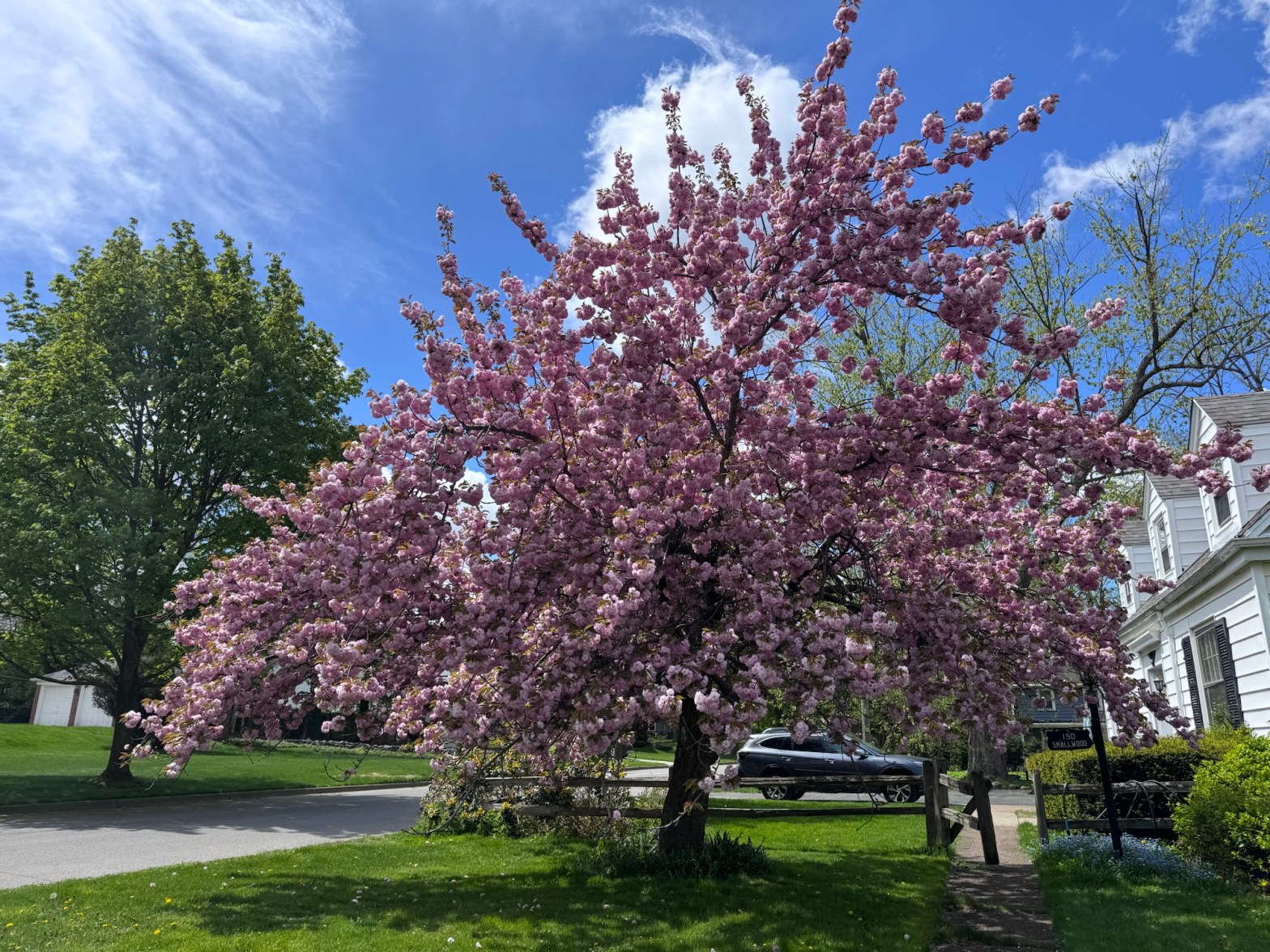
On UK Holiday

SnyderMesh is on Holiday in the UK. We are enjoying the cities of Oxford, Liverpool, Edinburgh, and London. It has been fun connecting my Seeed SenseCAP T1000-E Seeed SenseCAP T1000-E (Seeed) configured for EU_868 Presets learning about the mesh each of these communities has built out.

Please say hi if you see me out and about. If you want to say hello off the mesh by email please feel free to contact hello@snydermesh.com.

Oxford

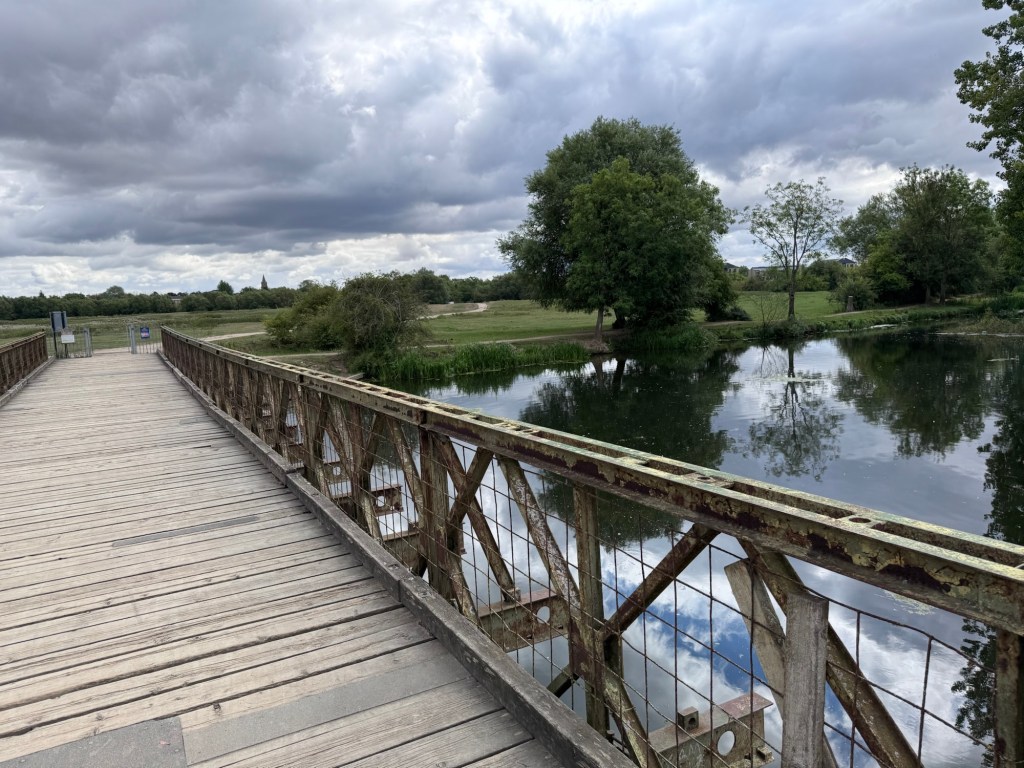
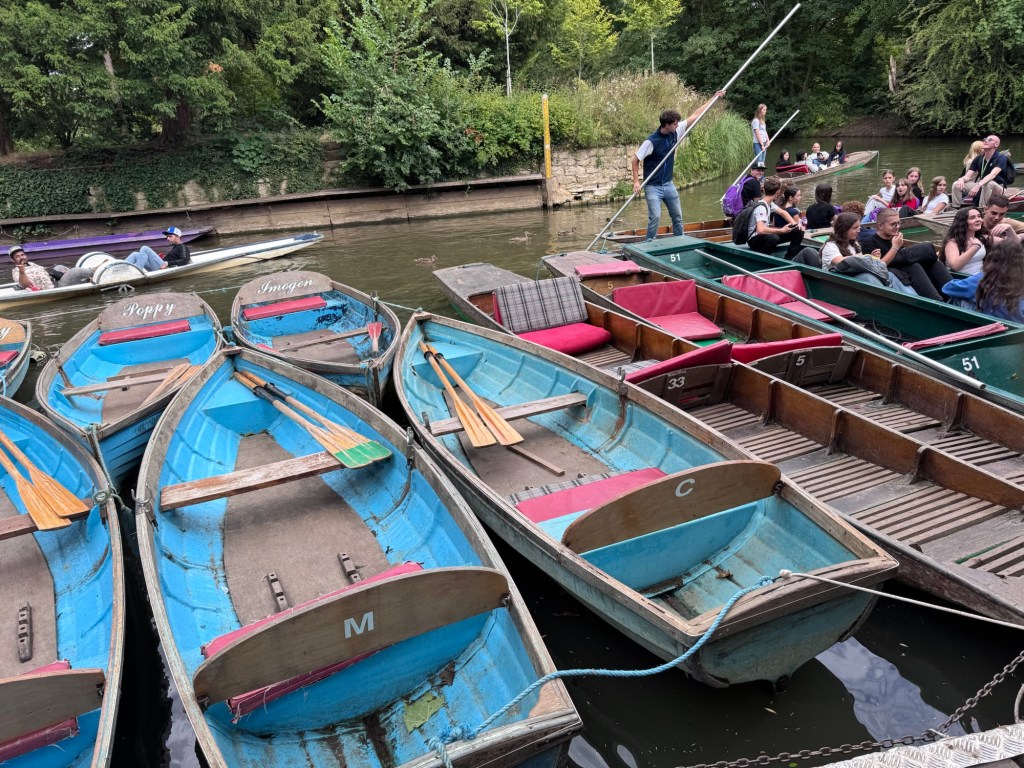
Beautiful city with deep upscale international appeal, gorgeous architecture, bustling waterways, and sprawling gardens but almost no nodes were seen.

Christ Church Gardens
Port Meadow
Punting near the Botanic Gardens

Stonehenge and Bath

If you ever have the opportunity, do not miss these impressive UNESCO World Heritage Sites dating back thousands of years.

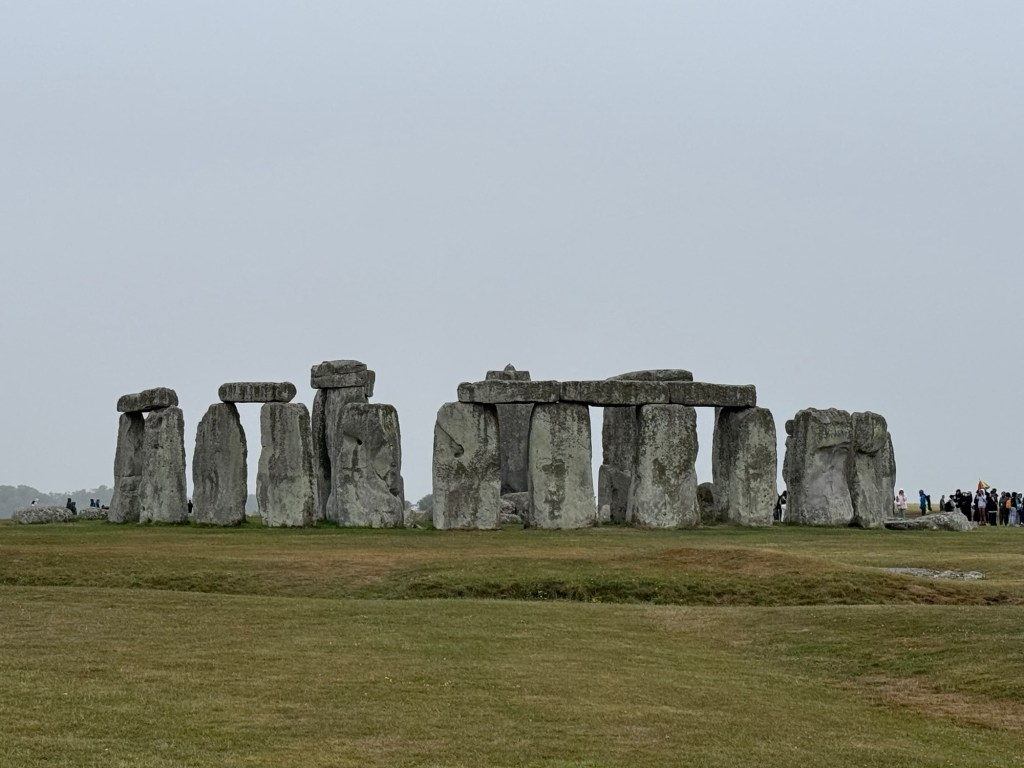
What more can be said of Stonehenge than an acknowledgement of its cultural and historical significance dating back more than 4,000 years. These megalithic structures and the people who built them are truly awe inspiring.

Stonehenge

Bath is renowned for its stunning Georgian architecture characterized by its Palladian style and use of local Bath stone. The city’s architectural landscape also features remnants of its Roman past, particularly the famous Roman Baths, and the Gothic architecture of Bath Abbey

Statue atop the Roman Baths
The Circus

Liverpool

The Home of the Beatles certainly impressed. Our family really enjoyed walking the Royal Albert Docks. Mathew Street where the famous Cavern Club is located was reminiscent of the New Orleans Bourbon Street for all day “Nightlife”.

A recreation of the Cavern Club at The Beatles Story

The city had a well established mesh extending from Liverpool to Manchester but with only light traffic on LongFast.

Liverpool to Manchester Mesh

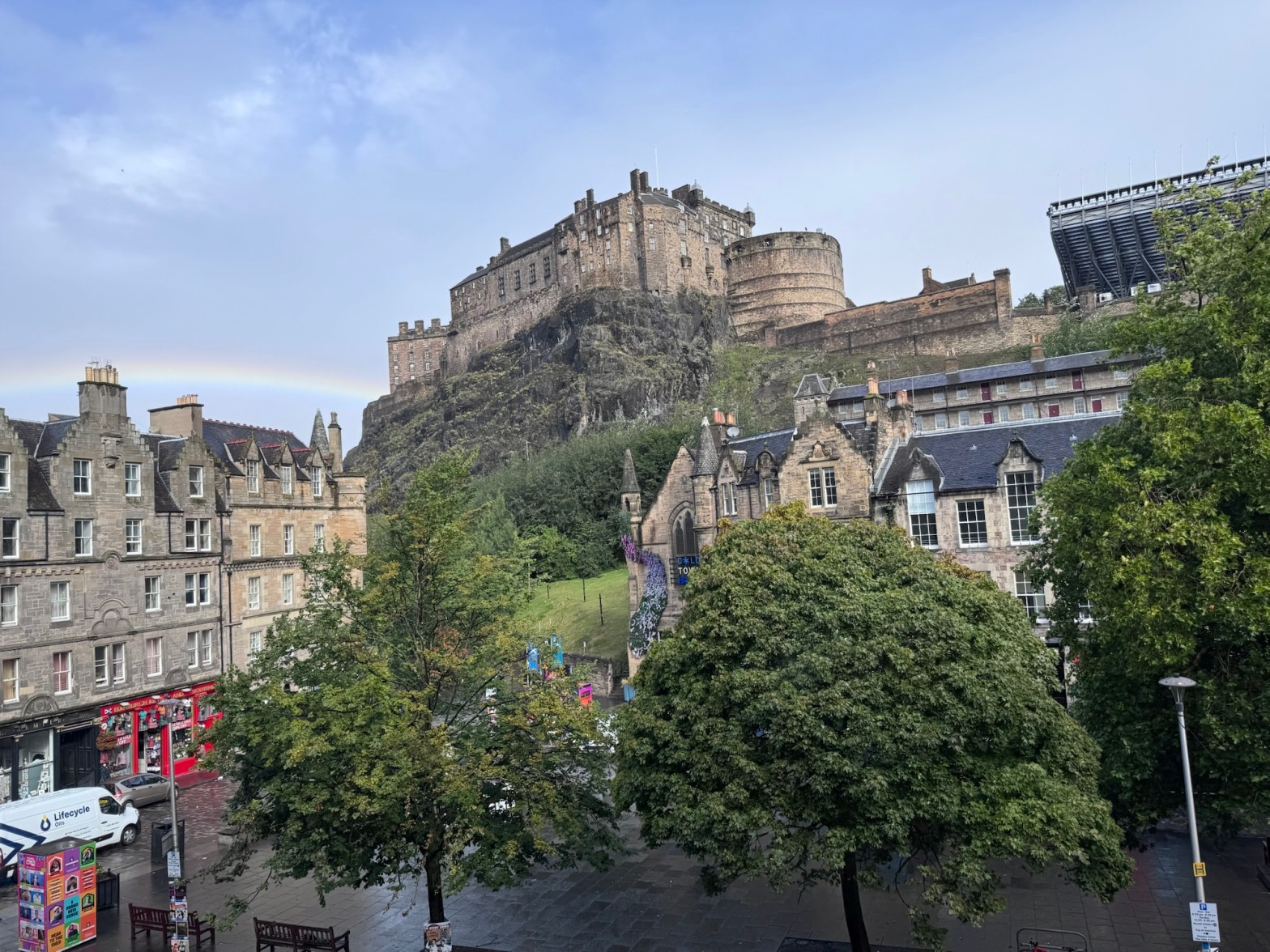
Edinburgh

The amazing architecture and landscape will set you into a magical experience. Grassmarket, where we are staying, feels like it’s in the center of some amazing attractions. It is said that Harry Potter’s Diagon Alley was based on Victoria Street with Magical Brooms at the top of the shopping list inspired by a historic “Brush Shop”.

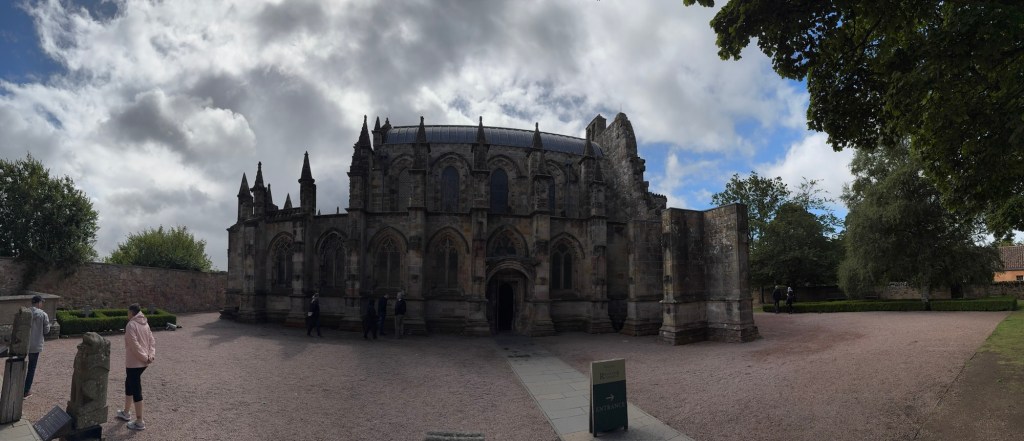
We really enjoyed taking the short trip out to Rosslyn Chapel, famous for its intricate carvings and Knights Templar affiliation highlighted in the best selling The Da Vinci Code book and feature film. The public bus 37 route back provided excellent views of the serene landscape and neighboring towns.

Rosslyn Chapel
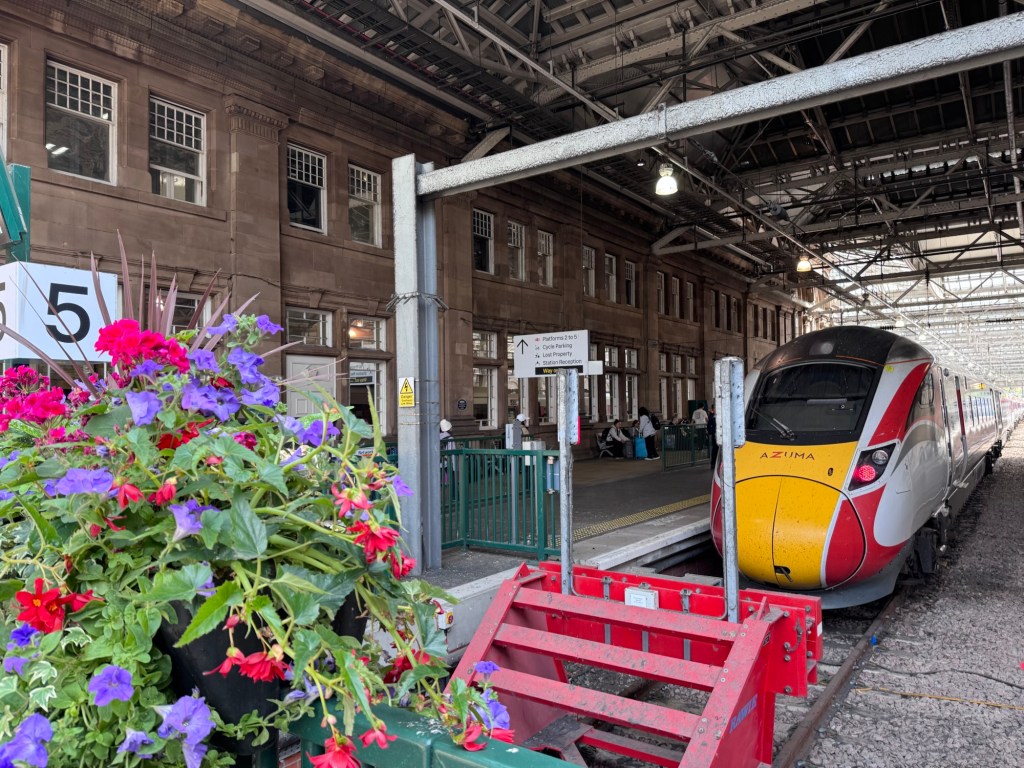
London North East Rail (LNER) from Edinburgh

The most impressive mesh so far of these UK Meshtastic communities is the mesh extending from coast to coast across Scotland from Glasgow to Edinburgh. The mesh is quite extensive with a Meshing Around Bot inviting Meshers to say hi with a QRZ welcome message. A local Mesher so kindly provided a few excellent dinner recommendations.

Glasgow to Edinburgh Mesh

London

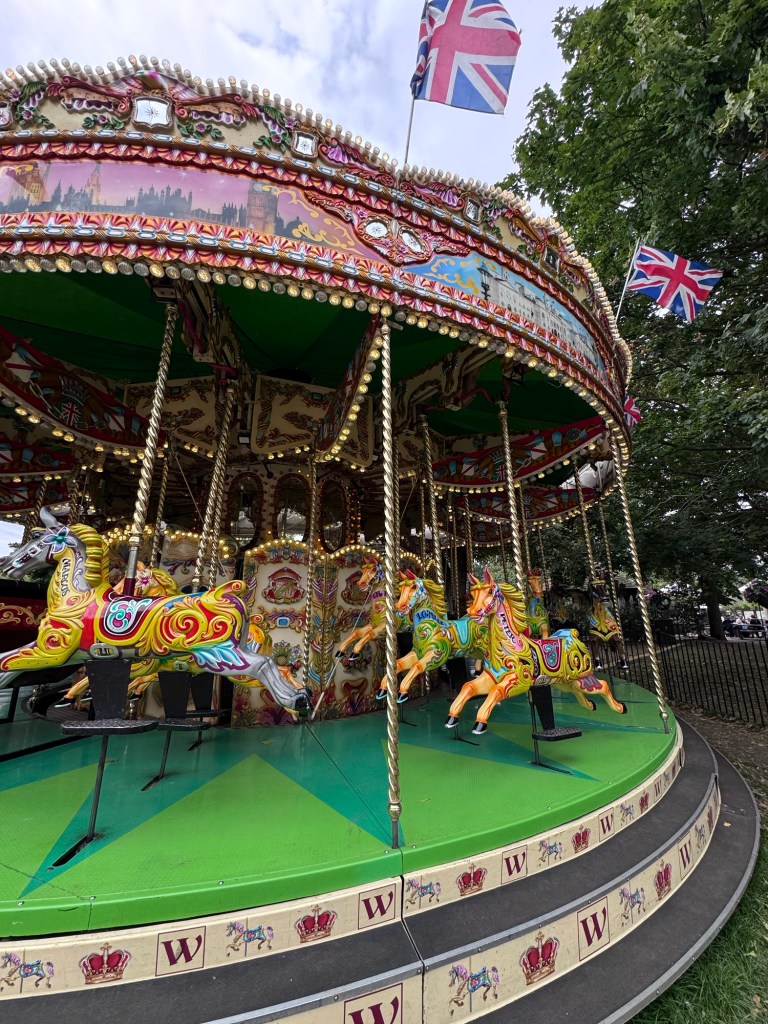
Hyde Park Carousel

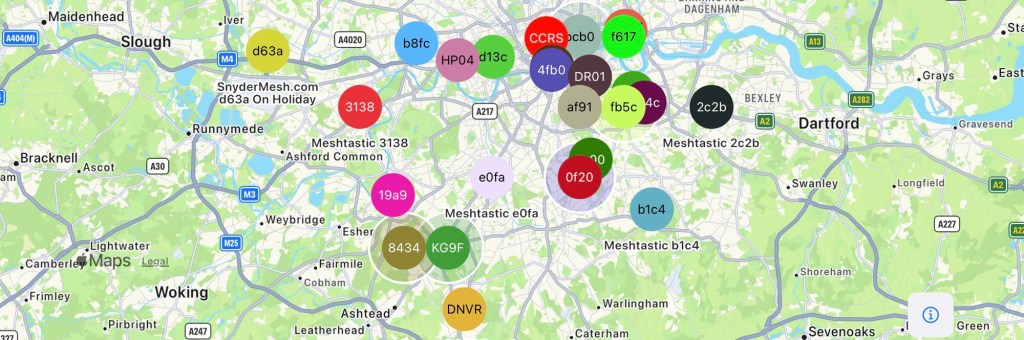
With a bit of time I have been able to chat on LongFast with another traveller from the US and someone Meshing from the Shard. The NodeDB continues to grow while at my hotel near Paddington. I had a few contacts on a sightseeing tour down town. I tried MediumFast for a while, but had no better luck.

Elizabeth Tower (Big Ben)

Not much traffic the last few days but we had a wonderful time.

London Mesh

Headed Home

Thanks to everyone for sharing your mesh land your community! We had a lot of fun exploring the UK but there is certainly no place like home!

Please check out my other posts such as how to build a $25 solar Meshtastic node or feel free to reach out at hello@snydermesh.com.

BuffaLoRa Node “COLE” Deployed at BARRA Boston Repeater Site

We’re excited to announce a new addition to the BuffaLoRa community network: the deployment of a Meshtastic node — short name COLE — at the Buffalo Amateur Radio Repeater Association (BARRA) Boston Repeater Site. This marks a significant step forward in extending low-power, off-grid mesh communication to the Southtowns and beyond.

BARRA is a cornerstone of amateur radio in Western New York, and we’re incredibly proud to partner with them in this endeavor. To learn more about their extensive work supporting the region with amateur radio repeater infrastructure and volunteer services, visit buffalobarra.org.

About the Site

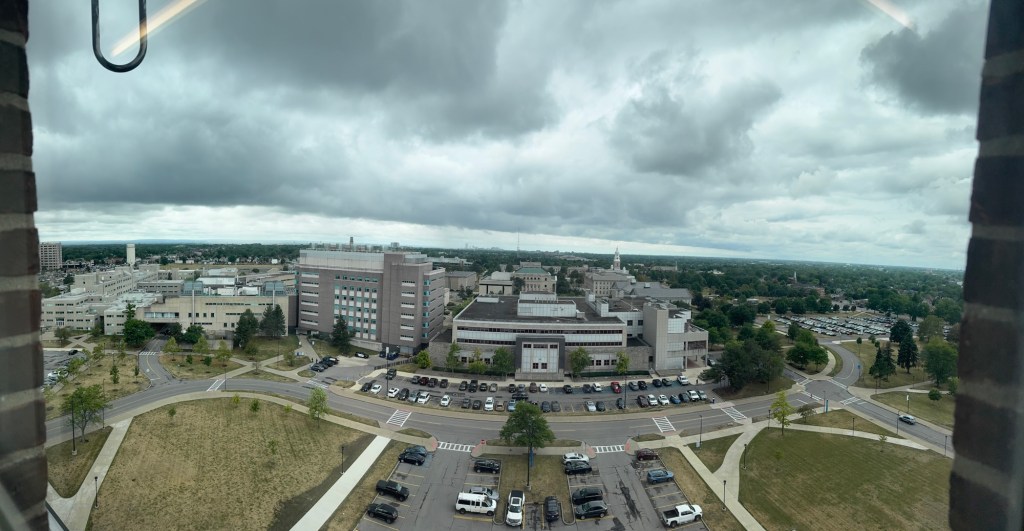
The BARRA Boston repeater site is perched at a high-elevation location (1,640 feet above sea level) in the Town of Boston, NY. Four and a half repeaters serve the amateur radio community from this location.

  • 147.910 MHz
  • 224.8 MHz
  • 444.000
  • 449.00 as part of 449.9625
  • Receive site of 10m repeater 29.580 MHz as part of 29.680 repeater

About the Node

The BuffaLoRa node COLE was constructed using a RAKwireless Mini Meshtastic Starter Kit (US915 band) featuring:

COLE Node Bill of Materials

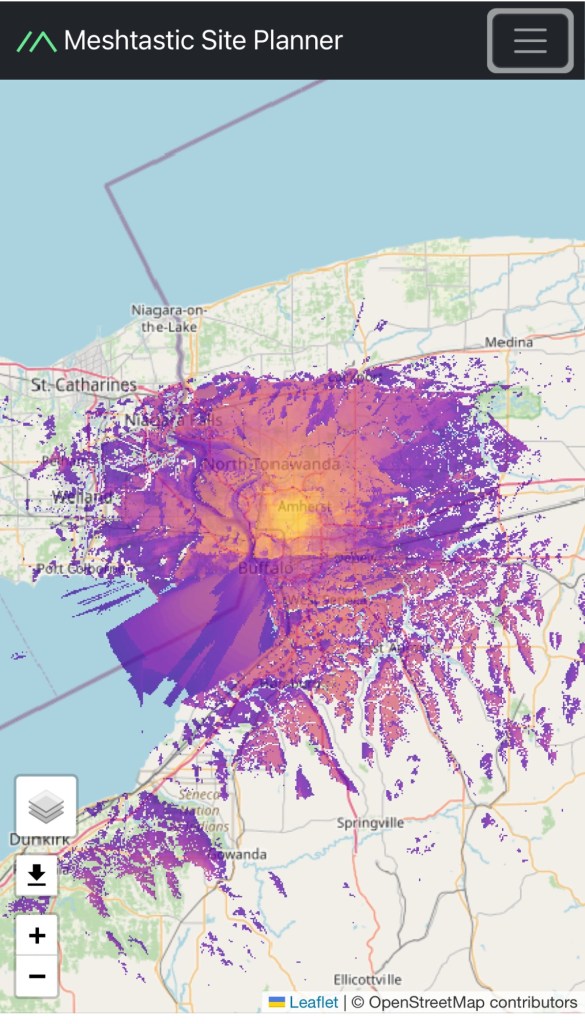
This ruggedized outdoor node brings LoRa-based messaging capabilities to mesh radio users across the Southtowns. Based on early field testing and our coverage map, users in the surrounding hills and valleys will see the biggest impact, with strong signal propagation expected throughout the area.

We’re working on expanding our network northward and strengthening connections into the City of Buffalo — stay tuned for updates!

Simulated coverage for COLE per Meshtastic Site Planner

Special Thanks to Our Partners

This deployment would not have been possible without the dedicated members of BARRA:

  • Ted Ertl (WA2HKS) – Trustee of the 444.000 MHz repeater and BARRA member, who coordinated the collaboration and shared expert RF knowledge, plus gave us a guided tour of the facility’s impressive infrastructure.
  • Jan Jarecki (WB2FXY) – Site manager who completed the outdoor antenna installation and RF cable routing, ensuring a clean and efficient setup.
  • Bill Brown (KB2TOY) – On hand to lend technical assistance and support during the installation.
  • Douglas A. Alderdice (KA2WFT) – BARRA President

We are deeply grateful for their time, knowledge, and commitment to the amateur radio and broader communications community.

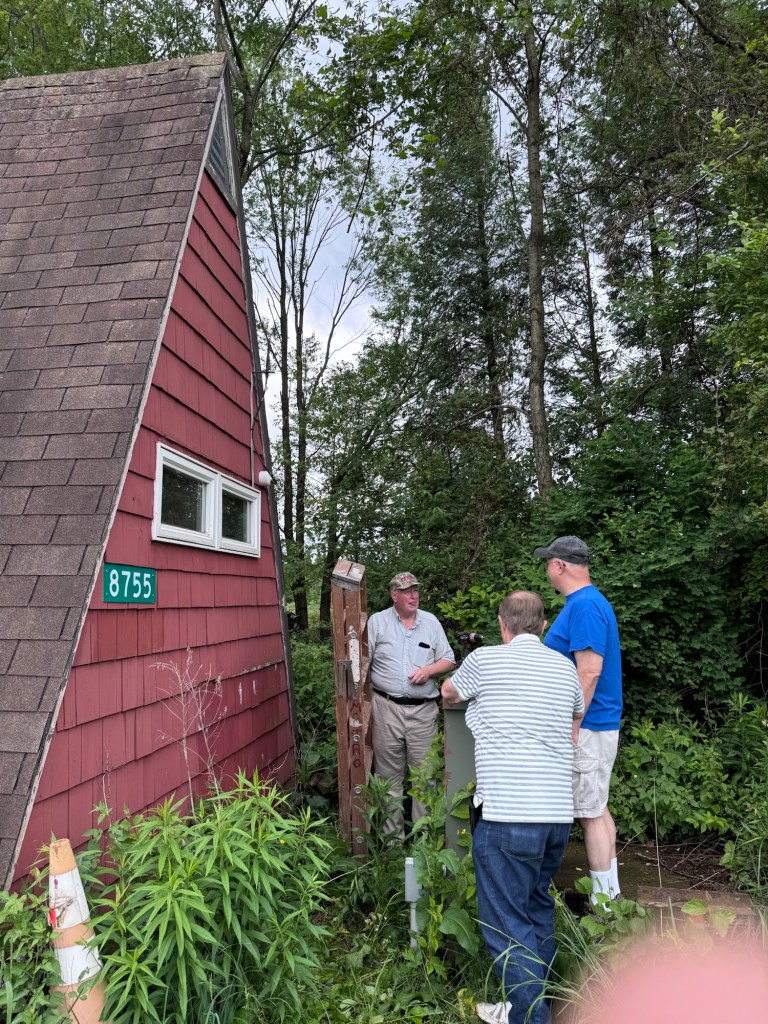
Jan, Ted, and Bill completing the exterior install
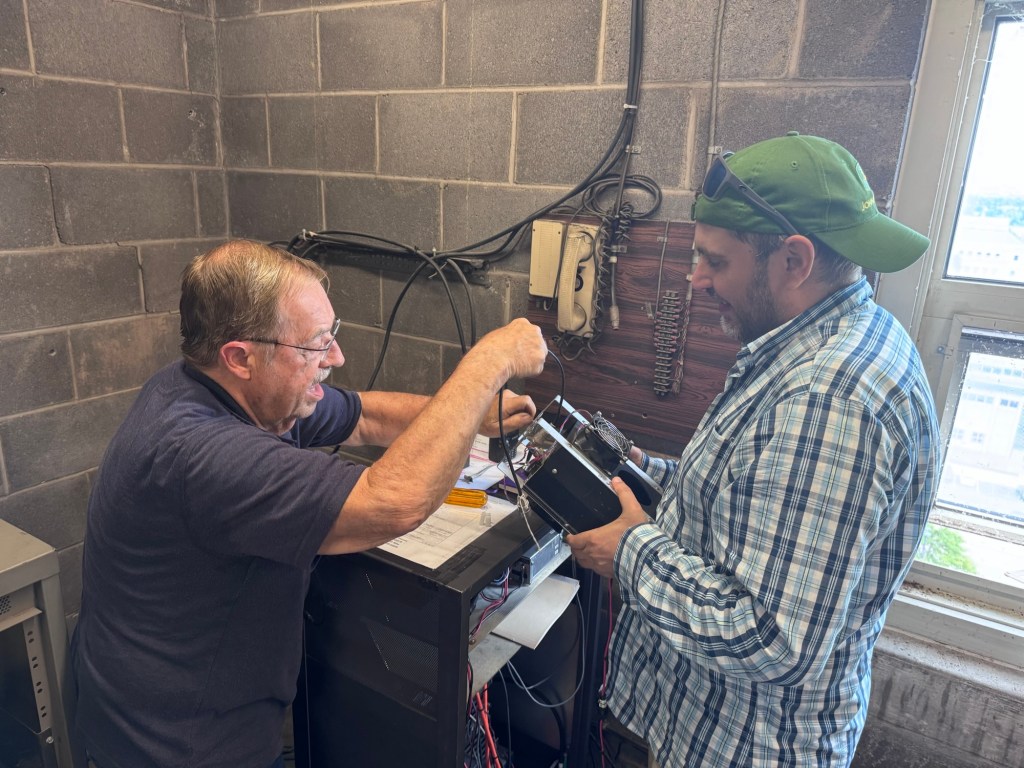
Wall mounted interior installation

Want to Get Involved?

The partnership between BuffaLoRa and BARRA showcases what’s possible when local organizations come together to build community-focused technology. If you’re a business, nonprofit, school, or community leader interested in hosting a node or supporting mesh expansion, we’d love to hear from you.

Help us grow the network and bring resilient, decentralized communication to every corner of Western New York.

📡 Contact us today at partnerships@snydermesh.com to learn more and get involved.

Let’s connect WNY — one node at a time.

New to the SnyderMesh: Two BBS Bots Now Live on the Mesh Network

We’re excited to announce a major upgrade to the SnyderMesh: two brand-new BBS (Bulletin Board System) Bots are now active on the network! These bots bring powerful, asynchronous communication tools to our local Meshtastic mesh, allowing users to post messages, share bulletins, and connect with others—even offline.

These bots are powered by two innovative open-source projects in the Meshtastic community:

Let’s break down what each bot does and how it enhances your mesh experience.

🤖 SnyderMesh.com BBS (meshing-around) – Powered by meshing-around by SpudGunMan

GitHub: SpudGunMan/meshing-around

This script-driven bot acts as a lightweight BBS message handler that works within the Meshtastic protocol. It brings back the retro functionality of a BBS system with a modern twist—optimized for LoRa mesh networks.

🔍 Key Benefits:

Simple to use, script-based message board: Users can post and retrieve messages using custom commands.

  • Support for advanced offline messaging: Send and receive messages across the mesh without needing the internet.
  • Node status and logging: It can log when other nodes are seen, giving insight into local network health.
  • Automation: Scripted to generate weather reports, environmental alerts, and automatic bulletins relevant to the Snyder community.
  • Fun and Games: Enjoy command based games like DopeWars, Lemonade Stand, BlackJack, and VideoPoker.
  • Amateur Radio Tools: local Repeater List, Solar Weather, Satellite Pass Info, SNR RF Activity Alerts, and Hamlib Integration.

This bot is ideal for mesh community coordination, backcountry communication, or hobbyist experimentation with automated mesh bots.

📬 SnyderMesh.com BBS Bot (TC2) – Powered by TC2-BBS-mesh by TheCommsChannel

GitHub: TheCommsChannel/TC2-BBS-mesh

TC2-BBS-mesh is more focused as a robust BBS messaging system designed specifically for Meshtastic networks. Think of it as a true offline message center for mesh users.

🔍 Key Benefits:

Mail System: Send private messages between users with inbox and outbox functionality.

  • Bulletin Board: Post public announcements, alerts, or general messages.
  • Channel Directory: See what channels are available in your area and who’s active.
  • Local-first architecture: Works entirely over the mesh, no internet required.

This bot is perfect for larger or community-driven mesh deployments, where coordination and user communication are essential—like neighborhood groups, events, search & rescue teams, or local preparedness networks.

Why This Matters

These BBS bots add a whole new layer of interaction to SnyderMesh. Instead of just pinging and passing data between nodes, we now have a true information layer where:

Messages persist even if the sender is offline. Important updates can be posted and shared automatically. Mesh users can engage more like a real community—no internet needed.

Whether you’re a prepper, hiker, radio enthusiast, or just a curious maker, these bots give you the power to communicate beyond the limitations of cell towers and routers.

Ready to Try It?

If you’re on the SnyderMesh, you can interact with these bots today. Send a message or query for help commands to get started. Full documentation and examples are available at the developers GitHub pages.

Got ideas for what the BBS bots should post? Want to build your own?

Reach out at hello@snydermesh.com or connect with us directly on the mesh.

Stay connected. Stay resilient. And now—stay informed with BBS on SnyderMesh.
Unlocking the Power of the Outdoors: How Meshtastic Supports Smart Environmental Monitoring

As our world becomes increasingly connected, the need to understand and protect the environment has never been more important. From wildfires and air pollution to soil conditions and water quality, environmental factors directly impact our health, our homes, and the future of our planet. But what if you could track those changes—right from a remote mountain trail or a community garden—without relying on cell towers or Wi-Fi?

That’s where Meshtastic comes in.

What Is Meshtastic?

Meshtastic is an open-source, low-power radio communication platform that uses LoRa (Long Range) technology to connect devices in areas without traditional internet access. Think of it as a walkie-talkie for data, not voice. People often use it to stay connected while hiking or during emergencies—but it’s also becoming a game-changer in the world of Internet of Things (IoT) for environmental monitoring.

How It Works for Environmental Monitoring

Environmental monitoring typically requires gathering data from remote areas: forests, farms, wetlands, or even urban neighborhoods with poor infrastructure. The challenge is getting this data back in real time or storing it reliably—especially when there’s no Wi-Fi or cell service.

Meshtastic solves this by using a mesh network: each device (called a node) can send and receive data from others nearby, relaying messages through the mesh until they reach a base station or central device. That means your sensor on the mountaintop can send temperature, humidity, or air quality data back to someone miles away.

Here’s a simplified breakdown of how it’s used:

  • Sensor devices: Attach environmental sensors (like for air quality, temperature, soil moisture, or CO₂ levels) to a Meshtastic-compatible microcontroller (e.g., an ESP32).
  • LoRa communication: The sensors transmit data via LoRa to other nodes in the network.
  • Data relay: Nodes pass data along the mesh until it reaches a collector device—like your phone or a Raspberry Pi gateway.
  • Visualization: From there, data can be uploaded (if internet is available) to visualization platforms like Grafana or even SMS alerts.

Real-World Examples

  • Wildfire Detection: Communities are experimenting with Meshtastic sensor nodes to track sudden rises in temperature and air particulates in dry, forested areas. These nodes can provide early warnings—even in places off the grid.
  • Smart Agriculture: Farmers use soil moisture sensors connected to Meshtastic to get real-time updates on field conditions, helping them water more efficiently and increase crop yields.
  • Air Quality Monitoring: Environmental groups and citizen scientists deploy portable air quality monitors connected to Meshtastic, gathering local data on pollution that can inform public health decisions.

Why It Matters: Scientific and Social Benefits

  • Real-time insights: Data can be collected and acted on quickly, helping prevent disasters or optimize resource use. Community empowerment: Local groups can monitor their own environments without relying on government infrastructure or expensive private systems.
  • Decentralized and resilient: Because it’s not dependent on cell towers or the internet, Meshtastic keeps working when other systems fail—especially critical during emergencies.
  • Low power, low cost: Devices can run for weeks or months on a battery, and the hardware is affordable for most people or small organizations.

The Future Is Mesh

The fusion of Meshtastic and environmental IoT is still growing, but it’s already proving that everyday people can participate in science and sustainability. Whether you’re a homesteader tracking rainfall, a hiker monitoring wildfire conditions, or a student building a weather station, Meshtastic offers a flexible, community-driven solution.

At SnyderMesh.com, we’re passionate about enabling these kinds of projects. Whether you need help building a node, setting up sensors, or expanding your mesh network, we’re here to support your mission.

Want to start your own environmental monitoring project with Meshtastic?

Check out our guides and gear recommendations at SnyderMesh.com and join the conversation with other citizen scientists making a difference—one packet at a time.

Stay connected. Stay informed. Mesh responsibly.

Buffalo Amateur Radio Repeater Association Presentation

It was my pleasure to present a high level overview of Meshtastic at the Buffalo Amateur Radio Repeater Association’s (BARRA) Technical Meeting on Thursday June, 5th 2025.

It was excellent to find some Meshtastic users already connected to SnyderMesh from as far away as West Seneca, NY and introduce Meshtastic to some new friends within the local Ham Radio community.

Please find the presentation materials at: Meshtastic High Level

I look forward to the opportunity to make additional partnerships in the Western New York region, connecting new nodes but most importantly connecting people.

Inexpensive Homemade Outdoor Solar Node

You can build your own Solar powered Meshtastic Node for less than $23. This project was inspired by the exceptional post on the official Meshtastic Blog: RAK WisBlock Harbor Breeze Solar Light Enclosure Hack.

Bill of Materials

Build materials
Disassembled Solar Light and build materials

Build instructions:

  1. Flash the Node with the latest version of the Meshtastic Firmware at Meshtastic Web Flasher
  2. Confirm that each component is working as expected before further assembly
  3. Disassemble the Solar Light by removing 4 screws
  4. Temporarily remove the 18650 Battery
  5. Separate the two boards of the Seed Xaio Kit
  6. Solder the wires to the corresponding battery contacts on the Seeed Xaio
  7. Optional: Swap out the LoRa antenna IPEX pigtail connector for the Optional SMA pigtail connector if using an external antenna
  8. Reassemble the Seed Xaio Kit
  9. Solder the other ends of the wires to the battery contacts being sure to respect the positive (+) and negative (-) terminal polarity.
  10. Optional: drill a hole in the Solar Light enclosure to allow for the installation of an SMA antenna connector pigtail and also install the LoRa antenna
  11. Secure the Seeed Xaio Kit and wires inside of the Solar enclosure. Be sure to route wires so they do not get pinched or damaged during re-assembly
  12. Reinstall the 18650 Battery being sure to respect the + and – terminal polarity.
  13. Test that the Solar light functionality works. The switch can be used to test the led lights. Make sure to cover the solar panel to simulate dark conditions
  14. Test that the Seeed Xaio Kit is functional in your chosen Meshtastic app over Bluetooth
  15. Optional: Add a dab of Waterproof Silicone Caulk to seal the hole made for the antenna connector and anywhere else water could intrude
  16. Reassemble the solar enclosure using the 4 screws and the two gutter/fence brackets and thumb screws
  17. Deploy somewhere with a good view of the sky and as high as possible for optimal LoRa range and Solar power, and enjoy!

You can toggle the Solar Light function on or off depending on your requirements.

UPDATE: Because of concerns about potentially no solar charging occurring with the light switch in the off position, I leave my node enclosure in the on position and snip the wire leading to the LED board to prevent lighting while still allowing for optimal Meshtastic battery performance. The battery will provide about a week of power for the node even without very sunny days. A few hours of full sun per week will keep the node running indefinitely. I have confirmed that I get daytime solar charging with limited overnight power draw since no lights are running.